Introduction
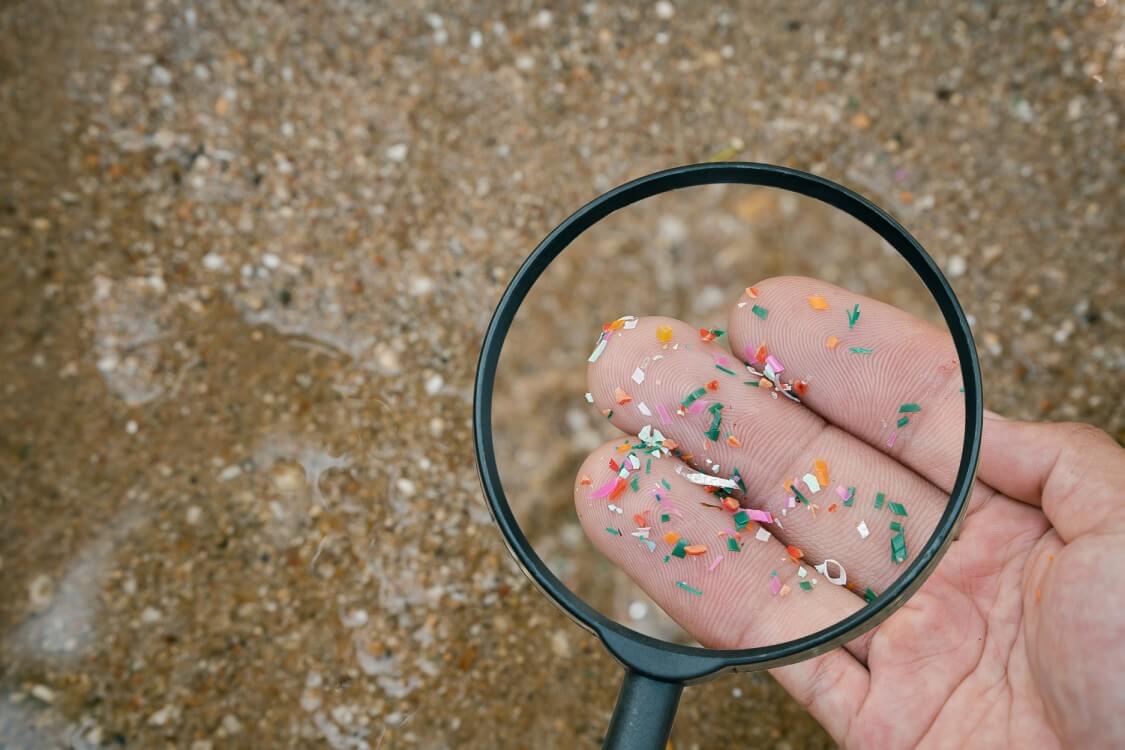
When most of us think of plastic pollution, we picture bottles and bags drifting in the ocean. But plastics don’t just stay out there — they break down into microscopic particles called microplastics (smaller than 5 millimeters) and nanoplastics (smaller than a micrometer), which have now become part of our everyday environment. They’re in the air we breathe, the food we eat, the water we drink, and increasingly, in our bodies.
The numbers are staggering: the average adult may consume the equivalent of a credit card’s worth of plastic every week through a mix of inhalation, ingestion, and skin contact (1). Scientists have already detected microplastics in human blood, lungs, placentas, and major arteries. Even more unsettling, recent studies have confirmed their presence in the human brain. A 2025 Nature Medicine study found that brain tissue contained up to 7 grams of microplastics — roughly the weight of a plastic spoon — and levels appear to be rising by nearly 50% over the last decade (2; 3). Alarmingly, brains from people with dementia had far higher concentrations than those without, though whether microplastics are a cause or a consequence of disease remains under investigation.
All of this raises urgent health questions: if these tiny particles can cross the blood–brain barrier and lodge in vital organs, could they also contribute to chronic diseases like cancer? Early research suggests the answer may be yes. Laboratory studies show that microplastics can trigger inflammation, oxidative stress, and DNA damage — biological hallmarks that set the stage for cancer development (4). A growing body of epidemiological research is beginning to link microplastic exposure with cancers of the lung, colon, breast, and liver.
In this blog, we’ll explore three key areas:
- The scale of microplastic pollution in our environment.
- What the science says about links to cancer and other chronic diseases.
- Practical steps you can take to reduce exposure and protect your health.
Microplastics in the Environment
Microplastics are no longer just an ocean problem. They’ve spread across every corner of the planet — from the deepest trenches of the Pacific Ocean to the snow in the Arctic. In fact, researchers estimate that about 8–10 million metric tons of plastic enter the oceans every year (5). These plastics don’t disappear; they just break down into smaller and smaller fragments.
One of the most striking findings comes from the Arctic seafloor, where scientists discovered over 210,000 metric tons of microplastics in just 13% of the region they studied. Even more alarming, levels there appear to be doubling every 23 years (6). If that trend continues, Arctic wildlife and indigenous communities could face increasing risks from environmental contamination.

Microplastics are also turning up in the food we eat. A recent survey in Oregon found microplastics in nearly 99% of seafood samples tested — including species commonly sold in grocery stores and restaurants (7). And it’s not just fish: they’ve been detected in bottled water, salt, honey, beer, and even fresh produce.
The air we breathe is another major source of exposure. Indoor air can contain 1 to 60 microplastic fibers per cubic meter, often shed from synthetic textiles like polyester or nylon. If you’ve ever noticed lint collecting in your dryer, that’s the visible version of what also escapes into the air we inhale every day.
The ecological consequences are already clear. Plastic makes up 60–80% of marine litter, and it’s been found in at least 267 wildlife species — including 44% of seabirds, 43% of marine mammals, and 86% of sea turtles (8). These species mistake plastics for food or become entangled in them, leading to injury and death.
Figure 1 gives you an idea of the different sources of microplastics in our lives. You can rest assured that this does not provide a comprehensive view of all the sources, given how pervasive the use of plastics has been in our lives for decades.
What’s still being uncovered is how this environmental saturation translates into human health risks. The fact that microplastics are showing up in seafood, drinking water, and even the air in our homes suggests that avoiding exposure is nearly impossible — which makes understanding their health effects even more urgent.
Microplastics and Cancer: What Does Science Say?
While scientists have known about the environmental toll of plastics for decades, only recently have they begun to examine what these particles might be doing inside our bodies. The concern is not just that microplastics accumulate in organs, but that they may trigger biological processes linked to cancer development.
How Microplastics Could Promote Cancer
Laboratory studies show that when micro- or nanoplastics enter living cells, they can:
- Trigger chronic inflammation — a well-known driver of cancer initiation and progression.
- Generate oxidative stress — creating free radicals that damage proteins, lipids, and DNA.
- Interfere with normal cell division — potentially leading to mutations and uncontrolled growth.
A 2024 review published in Life Sciences found evidence that microplastics may contribute to cancers of the lung, breast, prostate, and blood, largely through these pathways (4). Similarly, a 2025 review in Molecular Cancer noted possible associations with lung, liver, and breast cancer, while cautioning that direct human evidence remains limited (9).
Evidence from Human Studies
The real challenge has been translating laboratory findings into human health outcomes. Microplastic exposure is nearly universal, making it difficult to separate its effects from other environmental risks. Still, emerging studies are starting to reveal patterns:
- A 2025 meta-analysis covering more than 1 million participants found that microplastic pollutants were associated with a 10% increased risk of overall cancer in case-control studies (OR = 1.10, 95% CI 1.01–1.19). Stronger links were found with certain chemicals released from plastics, such as phthalates (OR = 1.28) and bisphenol A (BPA) (OR = 1.038) (10). Also, read our informative articles on BPA in the following links: history of BPA and how to detoxify from BPA.
- Cohort studies, which follow people over time, showed weaker and non-significant associations (OR = 1.04, 95% CI 0.96–1.12), highlighting the need for more long-term research.
- Another study suggested that while cancer was not consistently linked to microplastic concentrations, dose-response relationships did emerge for other chronic conditions like cardiovascular disease (11).
Beyond Cancer: Broader Health Concerns
Microplastics may not only influence cancer risk, but also disrupt other systems that indirectly affect cancer vulnerability:
- Respiratory system: Airborne microplastics may increase risks of lung cancer and fibrosis, according to UCSF researchers reviewing over 3,000 studies (UCSF).
- Digestive system: Chronic irritation of the gut lining and possible links to colon cancer are emerging (Health.com).
- Hormone disruption: Chemicals like BPA and phthalates act as endocrine disruptors, potentially raising risks for hormone-sensitive cancers such as breast and prostate cancer.
Microplastics in the Brain: A New Frontier
As we discussed in the introduction, perhaps the most unsettling discovery is that microplastics have been detected in the human brain. A 2025 Nature Medicine study found up to 7 grams of microplastics in brain tissue — comparable to the weight of a plastic spoon — with levels rising by nearly 50% in less than a decade (Nature Medicine, Smithsonian Magazine). Brains from dementia patients showed particularly high levels. Animal studies also suggest that these particles can cross the blood–brain barrier, ignite immune responses, and even affect memory and behavior in genetically susceptible mice (Washington Post).
While it’s too soon to say that microplastics directly cause brain or other cancers, their ability to infiltrate such sensitive tissues underscores why researchers are concerned.
Takeaway
The science is not yet definitive, but the trend is clear: microplastics are infiltrating the body in ways that could make cancer — and other chronic diseases — more likely over a lifetime. More research is urgently needed, but the early evidence is strong enough to warrant precaution.
Stats & Trends: A Quick Snapshot
Sometimes the numbers speak louder than words. Here are some of the most eye-opening statistics about microplastics and human health:
- A credit card a week – The average adult may ingest the equivalent of 5 grams of plastic every week from food, water, and air (Stanford News).
- Annual intake – That adds up to 78,000–211,000 particles per year, depending on diet and location (World Economic Forum).
- Oceans overflowing – Between 8 and 10 million metric tons of plastic enter the oceans each year (AAMC).
- Arctic doubling – Microplastic levels in Arctic seafloor sediments are doubling every 23 years, threatening pristine ecosystems (WIRED).
- Cancer link – A 2025 meta-analysis found a 10% higher cancer risk in people with higher microplastic exposure, particularly from plastic-derived chemicals like phthalates and BPA (International Journal of Surgery).
- Brain infiltration – Human brains have been found to contain up to 7 grams of microplastics, with levels rising by nearly 50% over the past decade (Nature Medicine, Smithsonian Magazine).
Taken together, these statistics paint a sobering picture: microplastics are no longer an “out there in the ocean” problem. They’re inside us — and their levels are climbing.
Actionable Steps: How to Protect Yourself
We may not be able to completely avoid microplastics — they’re now deeply embedded as part of our environment — but there’s a lot we can do to reduce exposure and lower potential health risks. Think of these steps as ways to lighten your body’s toxic burden.
Rethink Food and Drink Containers
- Avoid heating or storing food in plastic containers. Heat accelerates leaching of chemicals like BPA and phthalates into your food.
- Instead, use glass, stainless steel, or ceramic for storage and reheating (Food & Wine).
- Skip single-use plastics when possible — especially bottled water, which can contain double the microplastics found in tap water (World Economic Forum).
Filter What You Drink and Breathe
- Water filters: Certain reverse osmosis and activated carbon filters can remove a significant portion of microplastics. Check for certifications before buying.
- Air filters: Use HEPA filters in your home to reduce airborne fibers from synthetic fabrics and household dust (Wikipedia).
- Ventilate regularly, especially after vacuuming or cleaning.
Choose Fabrics Wisely
- Synthetic fabrics like polyester, nylon, and acrylic shed millions of fibers during washing.
- Opt for natural fibers (cotton, hemp, bamboo, wool) when possible.
- Use a microfiber-catching laundry bag or washing machine filter to trap fibers before they enter waterways (Wikipedia).
Clean Up Your Kitchen & Household Products
- Avoid cookware or utensils coated with plastics or non-stick chemicals like PFAS.
- Say no to personal care products with microbeads or poorly regulated “exfoliating beads.”
- Check labels for phthalates and BPA in food packaging and household products.
Support Policy & Community Solutions
- Advocate for bans on single-use plastics in your community.
- Support recycling initiatives and companies shifting to biodegradable packaging.
- Stay informed about regulations like the EU’s moves to restrict intentionally added microplastics (EPA).
Monitor Your Health
- Stay proactive with annual checkups and non-invasive screenings and assessments, especially if you’re in a higher-risk group or have concerning symptoms.
- Remember that microplastics may not act alone — they could amplify risks from diet, lifestyle, or genetic predisposition (Dana-Farber Cancer Institute).
- Think of prevention holistically: balancing diet, exercise, sleep, and stress reduction will strengthen resilience against environmental toxins (12).
Conclusion: From Awareness to Action
Microplastics are no longer just an environmental issue — they’re a personal health issue. From oceans and soil to our food, air, and even our brains, these particles are infiltrating nearly every aspect of modern life. Do not mistake these particles are inert, inconsequential annoyances. While the science is still unfolding, what we already know is enough to warrant extreme caution: microplastics can spark inflammation, disrupt hormones, and interfere with cellular health — all pathways that overlap with the development of cancer and several other chronic diseases.
The good news is that awareness is the first step toward action. By making simple shifts — choosing safer containers, filtering what you drink and breathe, opting for natural fibers, and supporting community-level change — you can reduce your body’s exposure and build resilience against long-term risks.
At Hope4Cancer, we believe this is part of a bigger picture: practicing proactive wellness. Rather than waiting for disease to strike, proactive wellness means taking charge of your health terrain today — strengthening your body’s defenses, reducing toxic burden, and creating conditions where cancer has less chance to thrive. This is the philosophy behind our integrative wellness programs, where education, lifestyle guidance, and supportive therapies come together to help people not only fight disease but also cultivate lifelong health. We encourage you to consider joining us at Hope4Cancer Cancun’s wellness center for a one-week wellness reboot — giving yourself a chance to reset, recharge, detoxify, and take other tangible steps toward lifelong health.
The story of microplastics is a reminder that our environment and our health are inseparably linked. By protecting ourselves from hidden toxins and investing in whole-person wellness, we’re not just reacting to problems — we’re building a healthier, more resilient future.
References:
- Savchuk K. 2025. What’s the deal with microplastics, the material that ‘never goes away’? In Stanford Report: Stanford Medicine
- Nihart AJ, Garcia MA, El Hayek E, et al. Bioaccumulation of microplastics in decedent human brains. Nature Medicine 2025
- Kuta S. 2025. The Human Brain May Contain as Much as a Spoon’s Worth of Microplastics, New Research Suggests. In Smithsonian Magazine
- Goswami S, Adhikary S, Bhattacharya S, et al. The alarming link between environmental microplastics and health hazards with special emphasis on cancer. Life Sci 2024, 355:122937.
- Balch B. 2024. Microplastics are inside us all. What does that mean for our health? In AAMC News: AAMC
- Simon M. 2023. The Microplastic Crisis Is Getting Exponentially Worse. In WIRED: WIRED
- Willige A. 2025. 4 Things you didn’t know about microplastics pollution. In World Economic Forum
- Ziani K, Ioniță-Mîndrican C-B, Mititelu M, et al. Microplastics: A Real Global Threat for Environment and Food Safety: A State of the Art Review. Nutrients 2023, 15
- Deng X, Gui Y, Zhao L. The micro(nano)plastics perspective: exploring cancer development and therapy. Molecular cancer 2025, 24:30.
- Liu X, Wang L, Liu X, et al. Microplastics, plastics, and their products exposures and cancer: a pooled analysis. Int J Surg 2025, 111:5593–605.
- Kuehn BM. Microplastics Exposure Linked to Cardiovascular Disease Risk, Chronic Health Conditions. Circulation 2025, 152:630–1.
- Jimenez A, Chakravarty S. 2025. Cancer Outsmarted: 11 Integrative Hallmarks to Minimize Risk and Optimize Health. Austin, TX: Envision Health Press
Authors