Integrative Lung Cancer Treatment at Hope4Cancer

View Patient Testimonials

View
Patient
Testimonials

Dr. Tony Jimenez speaking with a smiling patient at Hope4Cancer
An aerial view of ocean waves on the beach

Lung cancer is the leading cause of cancer-related death worldwide, claiming more lives each year than breast, colon, and prostate cancers combined. It begins when cells lining the airways or air sacs of the lung accumulate genetic changes that allow them to divide without restraint. Over time, these abnormal cells form a tumor that can invade surrounding tissue, travel through the lymphatic system, or spread through the bloodstream to distant organs such as the brain, liver, adrenal glands, or bones. How quickly this happens, and where the disease goes, depends heavily on the molecular type of the cancer, the biology of the individual patient, and the condition of the immune system at the time of diagnosis. This page describes Hope4Cancer's integrative approach to lung cancer, what that approach involves, and how it expands its reach into areas of whole-person care inaccessible through conventional treatment.

Lung tumors do not grow in isolation. They actively reshape the tissue around them into a cancer-supportive tumor microenvironment. Immune cells that would normally recognize and destroy cancer are suppressed or reprogrammed by chemical signals the tumor releases. New blood vessels are recruited to feed the growing mass. Inflammation, the body's protective response, becomes chronic and ends up sustaining the tumor rather than eliminating it. In non-small cell lung cancer (NSCLC), which accounts for roughly 85 percent of all lung cancer diagnoses, specific molecular features such as EGFR mutations, ALK rearrangements, and PD-L1 expression levels now guide treatment decisions. In small cell lung cancer (SCLC), which grows and spreads more rapidly, the biology is more uniform but the disease is often already widespread at diagnosis. Understanding these distinctions is essential to designing a treatment approach that addresses the cancer specifically, not generically.

Conventional lung cancer treatment, including surgery, chemotherapy, radiation, and targeted drug therapy, works by attacking cancer cells directly. These approaches have produced real advances, particularly for patients with identifiable molecular targets. What they do not address are the biological conditions that allowed the cancer to develop and that continue to shape how the body responds. Immune suppression, chronic inflammation, reduced cellular oxygenation, nutritional depletion, and the psychological weight of a serious diagnosis all affect treatment outcomes and long-term resilience. Addressing these factors is not peripheral but integral to lung cancer care.

Hope4Cancer's integrative lung cancer treatment program is built on the 7 Key Principles of Cancer Therapy®, a clinical framework designed to address not only the tumor itself but the systemic conditions that surround it. Non-toxic, evidence-supported therapies are selected and sequenced according to each patient's tumor biology, stage, and overall health. The program gives particular attention to immune restoration, oxygenation, microbiome health, and emotional resilience — each of which plays a meaningful role in how lung cancer behaves and how patients respond to care. For those exploring alternative lung cancer treatment options, the sections below describe the full program, the therapies involved, and what patients across all stages can expect.

Lung cancer is often detected late because early-stage disease frequently produces no symptoms at all. As the tumor grows, the most common signs include a persistent cough that does not resolve, coughing up blood or blood-tinged mucus, shortness of breath or wheezing, chest pain that worsens with deep breathing or coughing, and unexplained weight loss or fatigue. Hoarseness and recurring respiratory infections such as bronchitis or pneumonia can also signal that something is affecting the airways.

Lung Cancer

When symptoms prompt evaluation, or when screening imaging identifies an abnormality, the diagnostic process typically involves computed tomography (CT) scanning to characterize the size, location, and extent of the suspected tumor, often followed by a PET scan to assess metabolic activity and identify potential spread to lymph nodes or distant sites. A tissue analysis of the tumor confirms the diagnosis and identifies the specific type and subtype of the cancer. Most patients exploring their treatment options will already have this information. That analysis often includes molecular profiling — identifying genetic alterations such as EGFR mutations, ALK rearrangements, ROS1 fusions, and PD-L1 expression — information that may inform decisions about targeted drug therapy. Staging is completed through a combination of imaging findings, lymph node assessment, and the results of the tissue analysis.

What molecular profiling captures, however, is only one layer of a more complex picture. Lung tumors are rarely genetically uniform. Different cell populations within the same tumor carry different characteristics, vulnerabilities, and capacities to adapt under treatment pressure. This phenomenon, known as tumor heterogeneity, helps explain what some oncologists have described as cancer's adaptive intelligence, the ability of a tumor to evolve and develop resistance when challenged by a single treatment strategy. A therapy that targets one molecular pathway may produce a meaningful initial response, but a tumor that can adapt will often find ways around it. Designing a treatment approach that remains durable over time requires accounting for the full biological landscape of the disease, not only its dominant mutation.

Hope4Cancer's Integrative Lung Cancer Treatment Program

Lung cancer treatment at Hope4Cancer is organized around three clinical pillars: personalized targeted therapies, core therapies, and diagnostics and ongoing assessment. Every protocol is individually designed to reflect each patient's tumor biology, molecular profile, treatment history, and overall health. The program is guided throughout by the 7 Key Principles of Cancer Therapy®, a framework that addresses the full scope of conditions that drive and sustain cancer, not the tumor alone.

01

Targeted Therapies for Lung Cancer

Therapy selection for lung cancer is guided by each patient's tumor type, molecular profile, prior treatment history, and the extent of disease. Sono-Photo Dynamic Therapy (SPDT) is one of Hope4Cancer's flagship therapies for solid tumors, with its capacity to trigger both a localized cytotoxic response and a secondary immunological response addressing the tumor directly while engaging immune function simultaneously. The Sunivera™ Bio-Immunotherapy Protocol and DaVida™ Bio-Immunotherapy Protocol support immune restoration, particularly relevant for lung cancer patients whose immune function has been compromised by the disease itself, prior chemotherapy, or radiation. PDT Plus sensitizers are delivered intravenously, extending treatment systemically to include circulating tumor cells.

Learn more about Hope4Cancer's full range of targeted therapies →
02

Core Therapies

Every Hope4Cancer lung cancer program includes a comprehensive range of core therapies designed to address the full scope of the 7 Key Principles of Cancer Therapy®. Together they span every dimension of healing: direct tumor targeting, immune modulation, systemic detoxification, oxygenation, full-spectrum nutrition, microbiome support, and emotional and spiritual healing through the BEST™ (Behavioral, Emotional, and Spiritual Transformation) program. For lung cancer patients, oxygenation therapies and immune restoration receive particular clinical attention given the direct impact the disease has on respiratory function and immune competency.

Learn more about Core Therapies →
03

Diagnostics and Ongoing Assessment

Hope4Cancer's diagnostics and ongoing assessment protocols provide a longitudinal view of each patient's health — before, during, and after active treatment. For lung cancer patients, this includes color Doppler ultrasound imaging; comprehensive laboratory panels with tumor-specific biomarkers; functional assessments of nutritional, metabolic, and environmental health; thermographic evaluation of immune and organ activity; and patient-reported symptom and quality of life outcome tracking through the SPROUT™ system, among other specialized evaluations. This continuous monitoring allows the medical team to track treatment response, identify changes early, and make proactive adjustments to the program as the patient's condition evolves.

Learn more about Diagnostics and Ongoing Assessment →

Lung Cancer Treatment by Stage

Hope4Cancer works with lung cancer patients across all stages of disease. While the integrative framework remains consistent, the clinical emphasis and therapy selection are adjusted to reflect each patient's current condition, disease burden, and treatment history.

Stages 1 - 2

Early-Stage Lung Cancer

In early-stage lung cancer, the disease is localized or involves only nearby lymph nodes, and the body's overall functional capacity is typically higher. For patients who have undergone surgery or are pursuing integrative care as their primary approach, the focus at this stage is on targeted tumor therapy, immune activation, and establishing the systemic foundations of nutrition, detoxification, oxygenation, and microbiome health that support durable recovery. Early intervention also allows the program to address the biological conditions that may have contributed to the disease before they become further entrenched.

Stages 3

Locally Advanced Lung Cancer

Stage 3 lung cancer involves more extensive lymph node involvement or spread to adjacent structures, and patients at this stage often arrive with a more complex clinical picture. Hope4Cancer's integrative program addresses both the tumor and the systemic burden the disease has created, with particular attention to immune restoration, inflammation management, and maintaining functional capacity through the intensity of treatment. Patients pursuing integrative care alongside conventional treatment at this stage also receive support for managing the side effects of chemotherapy or radiation, and for preserving quality of life throughout.

Stages 4

Metastatic Lung Cancer

Stage 4 lung cancer has spread beyond the lung to distant organs, commonly the brain, liver, adrenal glands, or bones. Each site of metastasis can produce its own set of symptoms and clinical challenges. Hope4Cancer evaluates and addresses these systemic manifestations as part of the integrative treatment plan, with particular focus on reducing tumor burden, restoring immune function, and supporting quality of life and resilience throughout. While a stage 4 diagnosis is serious, it is precisely at this stage, when the disease has touched multiple systems and the body carries its greatest burden, that a whole-person approach becomes most essential. For many patients, integrative care opens possibilities that a purely conventional prognosis may not reflect.

About Lung Cancer: Types and Biology

Breast cancer is not one disease. Its subtype, receptor status, and growth pattern shape both the biology of the disease and the most relevant integrative approaches to treatment.

Non-small cell lung cancer is the most common form of lung cancer, accounting for approximately 85 percent of all diagnoses. It encompasses several distinct subtypes, the most prevalent of which are adenocarcinoma, squamous cell carcinoma, and large cell carcinoma. Adenocarcinoma, which develops in the mucus-secreting cells of the outer lung, is the most frequently diagnosed subtype and the one most likely to carry targetable molecular alterations such as EGFR mutations or ALK rearrangements. Squamous cell carcinoma arises in the cells lining the airways and is more commonly associated with smoking. Large cell carcinoma is a less defined category that tends to grow and spread quickly.

For patients seeking non-small cell lung cancer treatment, the relatively longer disease trajectory compared to small cell lung cancer creates a meaningful window for integrative care to work. Whether pursued alongside conventional treatment or as a primary approach, addressing the biological environment with holistic therapies can influence how the body tolerates treatment, responds, and remains resilient over time. The molecular complexity of NSCLC, and the well-documented tendency of targeted therapies to lose effectiveness as tumors adapt, makes a multi-dimensional approach not simply complementary but clinically sound.

Small cell lung cancer accounts for approximately 15 percent of lung cancer diagnoses but carries a disproportionate clinical weight. Unlike NSCLC, which can remain localized for months or years, SCLC has an exceptionally short doubling time, and by the time symptoms become noticeable, the cancer has typically already spread beyond the lung. This is why SCLC is almost always diagnosed at an advanced stage. SCLC originates in neuroendocrine cells of the lung and tends to be highly sensitive to chemotherapy and radiation initially, though resistance commonly develops and recurrence rates are high. Unlike NSCLC, small cell lung cancer rarely carries targetable molecular alterations, making it a disease where the limits of a single-pathway approach become particularly apparent. The speed and systemic nature of SCLC are precisely the reasons why addressing immune function, inflammation, and whole-body resilience alongside any direct tumor therapy is not optional - it is essential.

Molecular profiling has transformed how lung cancer is classified and how certain treatment decisions are made. Biomarkers are measurable biological indicators found in tumor tissue or blood that can reveal the genetic alterations driving a specific cancer, the activity of the immune system in and around the tumor, and how the disease is likely to behave over time. In lung cancer, key biomarkers include EGFR mutations, ALK and ROS1 rearrangements, KRAS mutations, MET amplifications, and PD-L1 expression levels. Each provides a different window into the biology of the disease.

At Hope4Cancer, biomarker and molecular profiling data inform how the integrative treatment program is designed and refined. Understanding a tumor's molecular characteristics, including its capacity to adapt and develop resistance, helps guide therapy selection, sequencing, and the emphasis placed on specific principles within the 7 Key Principles of Cancer Therapy® framework. From an integrative perspective, molecular profiling is not used to narrow the program to a single target, but used to deepen the understanding of the whole disease and its expected trajectory.

3-Week
Comprehensive clinical program
200+
Therapy sessions included
12-Month
Structured home program with regular check-ins
2
Follow-up visits to treatment center included in program cost

Patient Stories: Lung Cancer Journeys

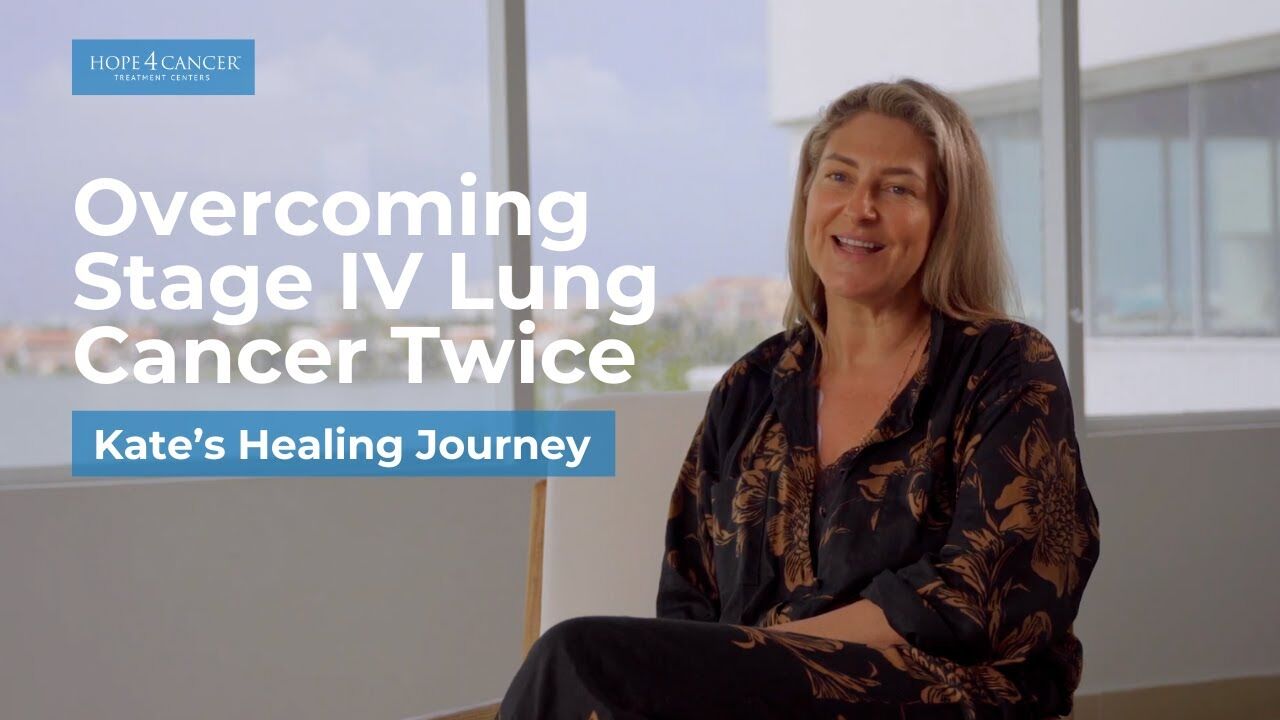
Hope4Cancer is grateful to the patients who have chosen to share their journeys, each arriving with a different diagnosis, each finding a new path forward through integrative lung cancer care. For those just beginning, their stories offer something rare: the light of someone who has walked this road before. Their stories are their own, and each is best told in their own words.

Request a Free Lung Cancer Treatment Plan

Take the first step toward integrative cancer care tailored to you. Contact Hope4Cancer to schedule a free consultation with an admissions counselor and receive a personalized lung cancer treatment plan built around your diagnosis, stage, and health goals.

Frequently Asked Questions

Hope4Cancer's lung cancer program combines non-toxic targeted therapies with a comprehensive range of core therapies, all guided by the 7 Key Principles of Cancer Therapy®. Targeted therapies include Sono-Photo Dynamic Therapy (SPDT), the Sunivera™ and DaVida™ Bio-Immunotherapy Protocols, and PDT Plus, which extends treatment systemically to include circulating tumor cells. Core therapies — several of which are non-toxic cancer therapies in their own right — address immune function, oxygenation, detoxification, nutrition, microbiome health, and emotional and spiritual wellbeing through the BEST™ program. Every protocol is individualized to each patient's tumor biology, molecular profile, stage, and overall health.
Yes. Many lung cancer patients at Hope4Cancer pursue integrative care in combination with conventional treatment. The medical team works collaboratively with each patient to sequence alternative and natural lung cancer treatment in a way that supports the body through conventional treatment, helps manage side effects, and preserves immune function and overall resilience. Patients who have completed conventional treatment and those pursuing integrative care as their primary approach are equally welcomed.
Yes. Hope4Cancer works with lung cancer patients across all subtypes — including non-small cell lung cancer (NSCLC) in its various forms and small cell lung cancer (SCLC) — and across all stages of disease, from early-stage through metastatic. The integrative framework remains consistent regardless of stage, but therapy selection and clinical emphasis are individualized to reflect each patient's tumor biology, molecular profile, treatment history, and overall health. Patients pursuing integrative care as a primary approach and those combining it with conventional treatment are both supported within the program.
Stage 4 lung cancer presents a complex clinical picture. The disease has spread to distant organs, each site of metastasis carrying its own set of symptoms and challenges, and the body is often carrying significant systemic burden. Hope4Cancer's integrative program evaluates and addresses these systemic manifestations as part of the overall treatment plan rather than in isolation. The focus at this stage is on reducing tumor burden, restoring immune function, managing symptoms, and supporting quality of life and resilience throughout. A stage 4 diagnosis is not a barrier to integrative care — for many patients, it is precisely the point at which a whole-person approach has the most to offer.
The immune system plays a central role in how lung cancer develops, how it progresses, and how the body responds to treatment. Lung tumors actively suppress immune activity in the tissue around them, reprogramming immune cells that would otherwise recognize and destroy cancer. Restoring immune function, not just stimulating it, but returning it to a state where it can do its work, is one of the primary goals of Hope4Cancer's integrative program. The Sunivera™ and DaVida™ Bio-Immunotherapy Protocols are designed specifically for this purpose, and immune restoration is woven into the core therapies and nutritional program as well. For lung cancer patients who have undergone prior chemotherapy or radiation, which can further deplete immune reserves, this emphasis is especially important.
No. A tissue analysis is not a prerequisite for beginning treatment at Hope4Cancer. Many patients arrive with imaging results, including CT scan, PET-CT, or chest X-ray, along with relevant blood markers and a clinical picture that is sufficient for the medical team to design a personalized integrative program. Hope4Cancer understands that some patients have concerns about tissue biopsy, including the possibility that needle procedures may risk disturbing the tumor. These concerns are taken seriously and respected. In certain cases, the medical team may identify a clinical benefit to tissue analysis and will share that reasoning openly with the patient. However, no procedure will ever be performed against a patient's wishes. The goal is to work with the information available and to begin supporting the body's capacity to heal as soon as possible.
A lung cancer diagnosis carries an emotional weight that is inseparable from the physical experience of the disease. Fear, grief, uncertainty, and the psychological demands of treatment all affect how the body responds and how patients navigate care. Hope4Cancer addresses this dimension directly through the BEST™ (Behavioral, Emotional, and Spiritual Transformation) program, which is an integrated component of every patient's treatment plan. BEST counselors work with patients to process the emotional reality of their diagnosis and to uncover and address pre-existing emotional traumas that may be contributing to the body's overall disease burden. At Hope4Cancer, emotional wellbeing is understood as a clinical priority, not a secondary concern.
Treatment at Hope4Cancer takes place at its facilities at Playas de Tijuana and Cancún, typically through three-week long programs. From the first day, patients receive a fully personalized treatment plan designed by board-certified integrative physicians, with therapies administered daily across all three clinical pillars. Progress is diagnostically monitored and protocols are adjusted as needed. Patients can expect a care environment oriented around healing in every dimension, including a thorough nutritional consultation and emotional care through the BEST™ program, all in a setting designed to support recovery as much as treatment itself.
The first step is a free consultation with a Hope4Cancer admissions counselor, who can answer questions about the program, explain what a personalized lung cancer treatment plan involves, and help determine whether Hope4Cancer is the right fit. There is no obligation. Patients are encouraged to share their diagnosis, stage, and any prior treatment history so the care team can provide the most relevant and informed guidance from the first conversation.